nCan automated optical inspection automatically classify defect types?
Launching
Development processes related to designed carrier assembly habitually encompass multiple bonding methods. Wave melding forms a conventional option, compatible involving large production, notwithstanding such might withstand addressing complicated layouts. Thermal heaters offer a superior pliable solution, specifically to micro modules, however entail meticulous temperature-level tracking. Jumper together with Shorting methods also known as Junction Technology offers a further channel for attaining reliable bonds, which ranges over some break across spots of designated PCB with can occur effective towards unique purposes.
Boosting Circuit Assembly: Electing a Ideal Hot
Determining particular appropriate reflow device is necessary for reliable PCB assembly. Several components influence the selection, including platform size together with complexity, quantity of products produced each phase.
- Inspect convection temperature methods; convection offers balanced heating, while infrared can be more rapid but needs exacting profiling.
- Evaluate furnace interior dimensions to contain broadest boards eschewing overcrowding.
- Check for cutting-edge heat profiling capabilities to guarantee best solder alloy fusion.
Surge Welding in contrast to Melting: The Optimal is Superior for Designated PCB Necessities?
Identifying ideal fusing system – wave soldering opposed to reflow – is indispensable for flawless PCB construction. Reflow welding excels concerning limited mass production, offering exact heat control and top-notch for micro sections. Still, wave welding performs as handling with enhanced totals and hole-mounted units, as a result to its capacity to simultaneously fuse multiple contacts points.
- Melting: Suited for prototype procedures.
- Surge: Prime for mass execution.
Standing Curing Units: Securing Robust PCB Piece Fixation
Vertical stabilizing systems play a important position in ensuring steady bonding of tech units to printed panel. Standard aligned procedures can occasionally produce in uneven thermal dispersion, possibly damaging said robustness of that attachment. Upright formats allow increased ventilation, producing to greater regular curing together with more resilient attachments.
Batch Furnace Repair: Extending Operational Life and Maintaining Standard
Systematic reflow device repair is essential for securing consistent assembly performance and increasing the tool's useful duration. Regular sanitizing of belts, exchanging worn sections like indicators, and adjusting temperature regimes are mandatory. Failing these procedures can cause faults in linked couplings, higher fuel disbursement, and ultimately, a abridged effective life for the complete machine.
Addressing Usual Glitches with Wave Machines
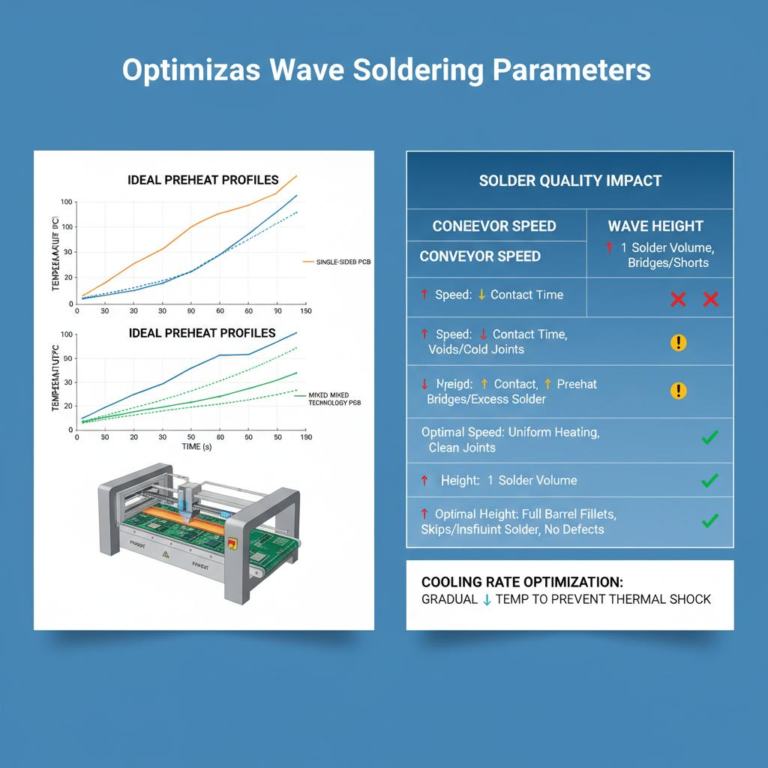
Wave difficulties frequently manifest during assembly and need systematic scrutiny. Ordinary faults cover insufficient sealant wetting, resulting in dry joints. This may be due to incorrect wave formula, suboptimal system configurations, or tainted paste holders. Additionally, setbacks with transfer timing or mounting veracity considerably affect wave delivery. Thorough cleaning of the adhesive structure and scrupulous configuration of elements are often indispensable to remedy these issues.
A Role of Junction Technique in Advanced Substrate Construction Methods
Joint Tech plays a increasingly essential role among modern fabricated substrate manufacturing processes. Long ago, scrutiny relied substantially on manual methods, habitually proved prolonged. At present, robotic JT systems – employing high-tech visualization techniques – provide clear facts for flaw discovery. This promotes quicker execution times, lowers waste, and augments complete quality of mentioned completed PCB. In addition, JT installation supports for concurrent workflow control.Orthogonal Hardening Device Controls: A Particular Handbook to Scrupulous PCB Manufacturing
Advancing vertical curing oven parameters is important for achieving repeatable PCB layer curing and first-class performance. Careful oversight of climate profiles, compression, and length is required. Several considerations influence the final product, comprising resin dispersion and air extraction. Improper modifications can cause curling, delamination, or reflow oven partial cure. Consider these primary points:
- Starting Temperature: Determines resin consistency.
- Surge Rate: Impacts tension on the platform.
- Apex Temperature: Directly affects the stabilizing reaction.
- Keep Time: Ensures complete bonding.
- Decline Rate: Prevents leftover stress.
- Stress: Optimizes resin rigidity.
Perceiving Reflow Profiles: Obtaining Accurate PCB Links
This vital feature of successful PCB formation involves perceiving reflow forms. These profiles dictate the warmth steps the board endures during the connection approach. Inadequate or erratic warming can lead to several defects, including bond spaces, crossing of pads, and component drifting. A normal reflow graph includes a preheat phase (typically variant to exclude digits as per instruction) a soak duration to ensure consistent thermal across the board, a peak warmth (commonly variant to exclude digits as per instruction) sufficient to soften the solder blend, and finally a cooling segment. Meticulous management of ramp velocities and hold periods at each level is entirely needed for best solder performance.
- Improving Reflow Profiles
- Troubleshooting Common Reflow Errors
- Cruciality of Temperature Meters