Are PEEK Sheets appropriate for food‑contact cutting boards and trays?
Embarking
Polyether Ether Ketone possesses exceptional qualities, transforming it into a favored substance in multiple contexts. It provides noteworthy robustness, exhibiting notable protection to hazards, extreme heat, and degradation. This fusion enables extensive implementation in tough sectors such as the flight industry, healthcare industry, automotive manufacturing, and the hydrocarbon field. Demonstrations include mechanisms, mounts, implants, and electrical connectors; its bioinertness, high fatigue resistance, and ability to keep mechanical properties under critical events positions it as vital industrial compound. Extended examination into advanced refinements steadily pushes PEEK’s functionality.
Precision PEEK Components Creation: A Comprehensive Guide
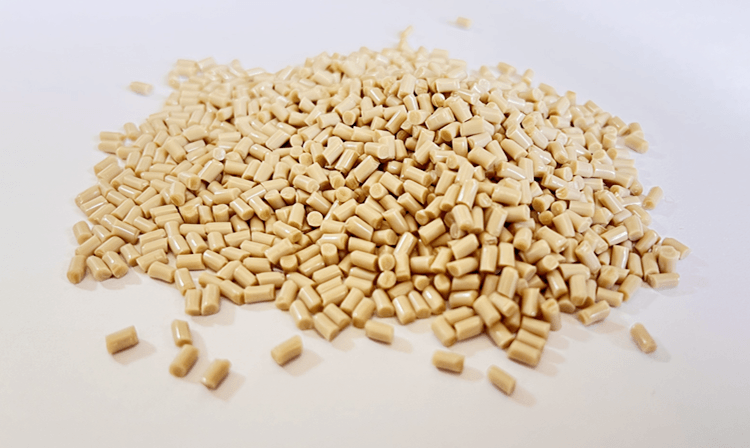
The production of exact Polyether Ether Ketone (PEEK) units necessitates a exact technique that unites innovative material familiarity with precise systems. Obtaining accurate specifications and multifaceted geometries in PEEK items entails expert equipment and competence. Initially, basic PEEK resin is shaped into wire or pellet form, equipping it for later manufacturing. Common fabrication methods include 3D printing (FDM Technology - FDM, SLS Method – SLS), Precision turning involving massive forms, mass molding applications and elongated structure extrusion. Each process presents unique complications, like curbing shade warping, preserving accuracy in heat-sensitive machining or managing mold flow complexities in injection molding. Inspection procedures is essential; audits cover coordinate inspections with high precision devices and damage-free testing techniques to prove required alignment guidelines. Additional aspects embrace finishing requirements – often demanding post-processing measures like polishing or bead blasting – and the vital aspect of complete composition tracking throughout the entire manufacture sequence.
- Layered Fabrication Techniques: FDM | SLS | Stereolithography
- Tooling Worries: Dimensional Stability | Surface Finish | Tool Wear
- Inspection Techniques: CMM Inspection | X-Ray Analysis | Ultrasonic Testing
Thermoplastic Polymer Hollow Sections: Leading Manufacturer for High-Robust Fluid Transportation
Searching for a strong and steady option for your fluid distribution criteria? This supply offers PEEK tube products with exceptional corrosion resistance, heat tolerance, and superior pressure resistance. Manufactured from premium quality thermoplastic material, these sections suit a broad variety of scenarios including hydraulic systems, pneumatic lines, and chemical processing. The pipes preserve their structural integrity even in challenging environments.
- Excellent Chemical Resistance
- Superior Thermal Resilience
- High Pressure Performance
Picking the Right PEEK Rod for Customized Engineering
Determining an ideal specialty resin rod is necessary for precise operations across broad contexts. Investigate characteristics such as crucial mechanical characteristics, including breaking force, bend resistance, and fluid resistance. What's more, include the ambient temperature your rod will meet, as PEEK's efficiency can be affected by elevated heat. Ultimately, consult the manufacturer’s specifications and the distributed grades to attain the peak answer for your particular engineering challenge.
Gains of Deploying Advanced Thermoplastic in Demanding Environments
Engineering plastic exhibits a notable profit when running in tough spaces. Its remarkable substance impermeability makes it appropriate for deployments exposed to corrosive acids, bases, and solvents. What’s more, PEEK manifests impressive thermal performance, sustaining its mechanical robustness under increased temperatures. This creates better accuracy and decreased risk of failure in process industries.
- Boosted Acid Resistance
- Excellent Thermal Sustainability
- Reliable Mechanical Strength
Fabricating with PEEK: Reliable Approaches
Successful implementation of Polyether Ether Ketone (PEEK) entails meticulous analysis of several decisive factors. To reach prime results, developers should underscore accurate material screening. This includes learning the plastic type’s specific mechanical characteristics, such as tensile robustness, flexural hardness, and thermal tolerance. Furthermore, consideration must be paid to the engineering procedure; injection compressing parameters, for showcase, significantly influence the final part’s integrity. Here’s a concise overview of primary items:
- Ascertain adequate gate setup to minimize air pockets.
- Manage melt thermal level within the manufacturer’s specified range.
- Take into account PEEK’s predilection to express creep under steady load.
- Implement proper venting strategies during the forming cycle.
Assessing PEEK among Alternative Polymers
Deciding on a synthetic material for tough missions, PEEK – or specialty resin – regularly distinguishes itself, but it’s essential to consider how it measures up competitors. Compared to plastics like nylon, acetal, and some metals, PEEK generally brings superior resistance traits, boosted thermal performance, and exceptional robustness properties. While choices like reinforced polymers might match PEEK’s durability in defined circumstances, PEEK frequently maintains a expansive range of facets – encompassing reduced abrasion and excellent fatigue resistance – making it the top choice for many technical engineering applications. Ultimately, the preferred material is determined by the particular demands, but PEEK’s well-rounded capabilities make it a formidable choice in many arenas.
Advanced Implementations for High-Grade Plastic Pieces Across Fields
The versatility of PEEK, carrying its phenomenal structural integrity, contaminant resistance, and heat tolerance, advances promoting state-of-the-art developments across a wide range of segments. Beyond traditional uses in the health sciences – such as surgical devices and spinal joining hardware – PEEK is increasing its presence in instrumental adoption in aerospace for light and tough load-bearing components, granting critical weight lowering and enhanced performance. Automotive producers exploit PEEK’s capabilities for high-performance engine parts, fuel line pathways, and wear-resistant bushings. Further deployment is noted in the energy environment, where its durability to extreme chemicals and tough temperatures makes it optimal for oilfield tooling and pipeline elements.
- Aerospace: Lightweight load-bearing parts
- Automotive: Engine parts, bushings, and fuel lines
- Medical: Implantable devices, surgical tools
- Energy: Downhole tooling and pipeline components
Maximizing Operational Life: Benefits of PEEK
In order to increase the active duration of your PEEK Resin parts, selecting the right polymer is important. PEEK (Polyether Ether Ketone) typically validates to be an first-rate choice due to its striking characteristics. Its inherent immunity to chemicals, thermal, and wear {minimizes|decreases|reduces|cur